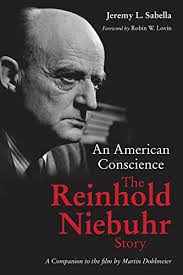

사회복음의 창시자, 라인홀드 니버 (1892–1971)
디트리히 본회퍼는 독일의 루터교 목사이자 신학자, 그리고 작가였다. 그는 히틀러와 나치 정권에 맞서 싸운 사람으로 잘 알려져 있다.
라인홀드 니버는 20세기 미국에서 가장 영향력 있는 신학자 중 한 사람이었다. 니버는 개신교 목사였고, 사회 윤리학자였으며, 설교자이자 글을 많이 쓰는 작가였다.
그는 미시간주 디트로이트에서 13년 동안 교회를 섬겼다. 그곳은 노동자와 자본가 사이의 갈등이 매우 심한 도시였다. 그는 그곳에서 활동하면서 쿠 클럭스 클랜(Ku Klux Klan)의 확산을 막기 위해 노력했다. (Ku Klux Klan, KKK)은 미국에서 만들어진 백인 우월주의 비밀 단체다. 흑인과 이민자, 가톨릭, 유대인 등을 차별하고 폭력을 사용했던 극단적인 인종차별 단체다.)노동조합을 돕기도 했고, 노먼 토마스 사회당의 당원이 되기도 했습니다.
목사로서 그는 사회 문제와 정치 문제에도 큰 관심을 가졌다. 그는 “사회복음(Social Gospel)”이라고 불리는 사상을 지지했다. 니버는 성경적 신앙과 사회 문제 사이에서, 종교와 정치 권력 사이에서 균형을 이루려고 노력했다.
그의 메시지는 항상 다음과 같은 주제들에 대해 예언자적인 관점을 보여주었다. 사회복음, 제1차 세계대전, 평화주의, 마르크스주의, 대공황, 미국의 고립주의, 제2차 세계대전, 원자폭탄, 민주주의 등 다양한 사회 문제에 대해 그는 깊이 생각하고 글을 썼다.
니버는 뉴욕의 유니온 신학교에서 30년 이상 가르쳤다. 그의 사회복음은 사회를 더 공정하게 만들기 위한 개혁을 의미했다.
그는 “인간의 본성과 운명(The Nature and Destiny of Man)”이라는 유명한 책을 썼다. 그 책에서 그는 이렇게 말했다: “인간은 하나님의 형상대로 창조되었다. 인간의 이성을 너무 믿으면 우상숭배가 되고, 하나님을 너무 믿지 않으면 냉소주의에 빠진다.”
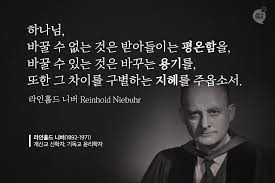
많은 사람들이 사용하는 “평화를 위한 기도(Serenity Prayer)”도 니버의 기도로 알려져 있다. 니버의 원래 기도는 먼저 용기를 구하는 기도였다: “하나님 아버지, 바꿔야 할 것은 바꿀 수 있는 용기를 주시고, 바꿀 수 없는 것은 받아들이는 평온을 주시며, 이 둘을 구별할 수 있는 지혜를 주소서.”
평화를 위한 기도
하나님, 나에게 평온을 주소서
내가 바꿀 수 없는 것을 받아들이는 평온을 주시고,
내가 바꿀 수 있는 것을 바꾸는 용기를 주옵시며,
그리고 그 차이를 아는 지혜를 주소서.
하루 씩 살아가게 하시고,
한 순간 씩 기뻐하며 살게 하시며,
고난을 평화로 가는 길로 받아들이게 하시고,
이 죄 많은 세상을 내 뜻대로가 아니라 있는 그대로 받아들이게 하소서.
내가 하나님의 뜻에 나를 맡길 때
하나님께서 모든 것을 바로잡으실 것을 믿게 하시고,
그래서 이 세상에서 적당히 행복하게 살다가
다음 세상에서는 하나님과 함께
영원히 큰 행복을 누리게 하소서. 아멘.
묵상을 위한 니버의 지혜
“인간이 정의를 행할 수 있는 능력이 있기 때문에 민주주의는 가능하다. 그러나 인간이 불의를 행하려는 성향이 있기 때문에 민주주의는 필요하다.”
“정치의 슬픈 의무는 죄 많은 세상에서 정의를 세우는 것이다.
“선한 사람이 권력을 가지면 타락하기 쉽고, 힘이 없는 순수한 사랑은 파괴되기 쉽다.”
“나는 설교자와 기자가 함께 모여 이야기하는 모임이 있으면 좋겠다. 설교자의 감상주의와 기자의 냉소주의가 만나면 진리에 더 가까워질 것이다.”
Reinhold Niebuhr
(1892 –1971)
Reinhold Niebuhr was one of the most influential American theologians of the 20th century. Niebuhr was a Protestant, a social ethicist, preacher, and prolific writer. He pastored a church for 13 years in Detroit, Michigan, home to an intense labor-capital conflict, where he worked actively to counter the rise of the Ku Klux Klan. He helped the unions and became a member of the Norman Thomas Socialist Party. As a pastor, he was also keenly interested in social and political affairs and was an advocate for what was known as the “social gospel.” Niebuhr strived to mediate between biblical faith and social issues, between religion and power politics. His message always reflected his prophetic perspectives on the social gospel, World War I, pacifism, Marxism, the Great Depression, American isolationism, World War II, the atomic bomb, and democracy.
Niebuhr taught at Union Theological Seminary in New York City for over 30 years. His social Gospel was about progressive social reform. He wrote “The Nature and Destiny of Man” (two volumes): “Humans are created in the image of God. Too much faith in human reason leads to idolatry; too little faith in God leads to cynicism.” The famous Serenity Prayer often used by Twelve Step Recovery is commonly attributed to Reinhold Niebuhr. Niebuhr’s prayer originally asked for courage first: “Father, give us courage to change what must be altered, serenity to accept what cannot be helped, and the insight to know the one from the other.”
“THE FULL SERENITY PRAYER” OF REINHOLD NIEBUHR
God grant me the serenity
To accept the things I cannot change;
Courage to change the things I can;
And wisdom to know the difference.
Living one day at a time;
Enjoying one moment at a time;
Accepting hardships as the pathway to peace;
Taking, as He did, this sinful world
As it is, not as I would have it;
Trusting that He will make things right
If I surrender to His Will;
So that I may be reasonably happy in this life
And supremely happy with Him
Forever and ever in the next. Amen.
Reflection with Wisdom of Reinhold Niebuhr
“Man’s capacity for justice makes democracy possible, but man’s inclination to injustice makes democracy necessary.”
“The sad duty of politics is to establish justice in a sinful world.”
“Goodness, armed with power, is corrupted; and pure love without power is destroyed.”
“I think there ought to be a club in which preachers and journalists could come together and have the sentimentalism of the one matched with the cynicism of the other. That ought to bring them pretty close to the truth.”