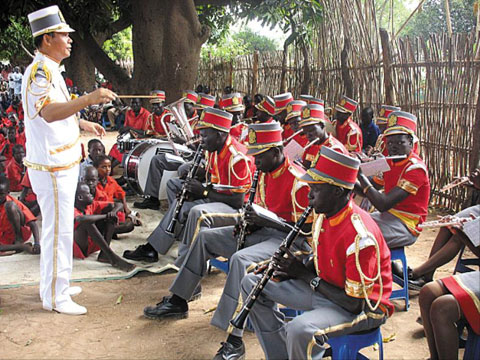

총 대신 음악을 쥐어 준 이태석 신부 (1962-2010)
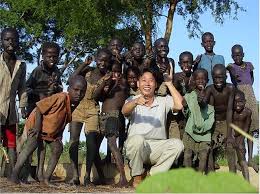
“한 알의 밀이 땅에 떨어져 죽지 않으면 한 알 그대로 있지만, 그것이 죽으면 많은 열매를 맺는다.”
-요한복음 12:24-
사람이 행복하기 위해선 무엇을 더 가질 것인가를 묻지 말고, 무엇을 내려 놓을 것인지를 물으라 했다. 우리 주님은 십자가의 길을 선택하셨고, 당신의 생명을 내려 놓으심으로 우리에게 생명을 주셨다.
아프리카 남수단, 톤즈의 아이들은 태어나면서부터 전쟁을 배웠다. 그들의 손에는 연필이 아니라 총이 쥐어져 있었고, 책이 아니라 공포를 먼저 배웠고, 꿈이 아니라 생존 을 위한 본능만 있었다.
이 척박한 땅에 복음을 나누려 온 이태석 신부는 살기어른 그 아이들의 손에총 대신 악기를 쥐어 주고, 아름다운 화음과 멜로디를 선물했다. 트럼펫을 불고 드럼을 치고 함께 행진하며, 저녁에는 한국어로 “사랑해 당신을” 부르게 하였다. 노래와 신부의 무조건적인 돌봄과 사랑을 체험하며 아이들의 얼굴이 바뀌기 시작했다. “너는 살기 위해 사람을 죽이기 위해 태어난 존재가 아니라 아름다움을 만들어 내기 위해 이 세상에 왔다.” 그리고 이 메시지는 말이 아니라 공동체 안에서 체험으로 그들의 가슴을 파고 들어갔다.
그 브라스 밴드에 있던 소년들 가운데 몇 명이 훗날 한국에 오게 된다. 그들은 전쟁 고아였고 총을 들던 아이들이었지만 이태석 신부가 심어 놓은 꿈 때문에 공부를 시작한다. 그리고 마침내 그중 두 사람이 한국 의대에 진학하여 의사가 된다. 복음은 한 아이의 운명을 바꾸고 한 민족의 미래를 바꾸는 하나님의 능력이 되었다.
이태석 신부는 내전의 폐허위에 암울한 톤즈에서 시스템을 바꾸겠다고 외치지 않았다. 대신 한 아이를 살리고, 글을 가르치고, 병을 고쳐 주고 악기를 쥐어 주며, 아름다운 멜로디와 화음을 선물했다. 그런데 그것이 총을 내려놓게 했고, 사람을 살리는 의사를 만들어 냈고, 공동체를 변화시켰다. 이것이 십자가의 길이다.
예수님도 병든 자를 고치시고, 배고픈 자를 먹이시고, 버림받은 자들을 친구 삼으셨다. 단순한 시의 베푸는 자선이 아니라, 인간의 존엄을 회복시키는 하나님 나라의 선포였다. 톤즈에서 일어난 일은 바로 그 복음의 재현이었다.
이태석 신부는 47년의 짦은 생을 살았다. 그의 사랑은 설교보다 진했고, 교리보다 깊었고, 말보다도 강했다. 인종, 언어, 문화차이를 넘어선 십자가의 사랑은 그 자체로 기적이었고, 사람을 변화시키는 능력이었다. 절망 대신 희망을 주는 삶, 사순절의 길이다. 그의 죽음 이후에도 아이들이 자라고 학교가 남아 있고 의사가 배출되고 사람을 살리는 교회는 계속된다. 한 알의 밀알이 죽었고, 100배의 사랑의 결실을 맺기 때문이다. 한 사람을 살리고, 한 영혼을 품고, 한 공동체를 세워가는 것, 그것이 사순절의 길이다. 사순절은 예수님의 고난만 묵상하는 것이 아니라, 예수님의 삶을 다시 살아 보는 시간이기 때문이다.
이태석 신부의 어록과 기도
“나는 그들에게 무엇을 주러 간 것이 아니라 나 자신을 주러 갔습니다.”
“가난은 불편한 것이 아니라 사랑할 수 있는 기회입니다.”
“가장 보잘 것 없는 사람에게 한 것이 곧 예수님께 한 것입니다.”
“나는 병을 고쳐 주는 의사보다 영혼을 살리는 사람이 되고 싶었습니다.”
“함께 울고 함께 웃는 것이 진짜 사랑입니다.”
“내가 있는 곳이 가장 행복한 곳입니다. 이곳에 사랑할 사람이 있기 때문입니다.”
이태석 신부와 함께 드리는 기도:
주님, 제가 이곳에 있는 이유를 잊지 않게 하소서.
많은 것을 이루기보다 한 사람을 사랑하게 하시고
큰 일을 하기보다 당신의 마음으로 살게 하소서.
가난한 이들 가운데서 당신을 만나게 하시고
아픈 이들의 손을 잡을 때 당신의 손을 잡게 하소서.
제가 가진 것을 주는 사람이 아니라
제 자신을 내어 주는 사제가 되게 하소서.
오늘도 톤즈의 아이들을 통해 당신의 얼굴을 보게 하소서.
아멘.
Father James (Tae-seok) Lee, who gave children music and the Gospel instead of guns.
“Unless a grain of wheat falls into the ground and dies,
it remains only one seed. But if it dies, it produces many seeds.”
— John 12:24-
Someone once said that if you want to be happy, don’t ask what more you can gain; ask what you can let go of. Our Lord chose the way of the cross. By laying down his life, he gave us life.
In Tonj, South Sudan, children were born into war. Instead of pencils, they held guns. Instead of books, they first learned fear. Instead of dreams, they knew only the instinct to survive.
Into this dry and wounded land came Lee Tae‑seok to share the gospel. He took the guns out of the children’s hands and gave them musical instruments. He gave them harmony and melody. They played trumpets and drums, marched together, and in the evenings they sang in Korean, “I love you.” As they experienced the songs and his unconditional care and love, their faces began to change. “You were not born to kill in order to survive. You were born to create beauty.” This message was not just spoken—it was lived and felt in the community, and it sank deep into their hearts.
Some of the boys from that brass band later came to Korea. They had been war orphans and child soldiers, but because of the dream he planted in them, they began to study. In time, two of them entered Korean medical schools and became doctors. The gospel became God’s power that changed a child’s destiny and the future of a people.
He did not shout that he would change the whole system in the ruins of civil war. Instead, he saved children, taught them to read, treated the sick, placed instruments in their hands, and gave them beautiful music. And that made them put down their guns. It raised doctors who save lives. It changed a community. This is the way of the cross.
Jesus also healed the sick, fed the hungry, and became a friend to those who were rejected. This was not simple charity. It was the announcement of God’s kingdom that restores human dignity. What happened in Tonj was a living picture of that gospel.
He lived only 47 years but his love was stronger than sermons, deeper than doctrine, and more powerful than words. The love of the cross that crossed race, language, and culture was itself a miracle that changed people.
It is the Lenten way—a life that gives hope instead of despair. Even after his death, the children grew, the school remained, doctors were trained, and a life-giving church continued. One grain of wheat fell into the ground and produced a hundredfold harvest of love.
To save one person, to hold one soul, to build one community—this is the way of Lent. Lent is not only a time to think about Jesus’ suffering, but a time to live his life again.
Words of Lee Tae-seok:
“I did not go there to give them something; I went to give myself.”
“Poverty is not discomfort. It is a chance to love.”
“What you did for the least person, you did for Jesus.”
“Rather than being a doctor who heals bodies, I wanted to be a person who saves souls.”
“Real love is to cry together and to laugh together.”
“The happiest place is where I am now, because there are people here to love.”
A prayer with Father TaeSeok Lee:
Lord, help me not to forget why I am here.
Let me love one person rather than try to achieve many things.
Let me live with your heart rather than try to do great works.
Let me meet you among the poor.
When I hold the hands of the sick, let me be holding your hand.
Make me a priest who gives not only what I have,
but my very self.
Today again, through the children of Tonj, let me see your face.
Amen.
갈보리산 위에 (찬송가 150장)
갈보리 산 위에 십자가 섰으니 주가 고난을 당한 표라
험한 십자가를 내가 사랑함은 주가 보혈을 흘림이라
최후 승리를 얻기까지 주의 십자가 사랑하리
빛난 면류관 받기까지 험한 십자가 붙들겠네
멸시 천대 받은 주의 십자가에 나의 마음이 끌리도다
귀한 어린 양이 세상 죄를 지고 험한 십자가 지셨도다
최후 승리를 얻기까지 주의 십자가 사랑하리
빛난 면류관 받기까지 험한 십자가 붙들겠네
험한 십자가에 주가 흘린 피를 믿는 맘으로 바라보니
나를 용서하고 내 죄 사하시려 주가 흘리신 보혈이라
최후 승리를 얻기까지 주의 십자가 사랑하리
빛난 면류관 받기까지 험한 십자가 붙들겠네
주님 예비하신 나의 본향집에 나를 부르실 그 날에는
영광 주에 계신 우리 주와 함께 내가 죽도록 충성하리
최후 승리를 얻기까지 주의 십자가 사랑하리
빛난 면류관 받기까지 험한 십자가 붙들겠네